Constellation

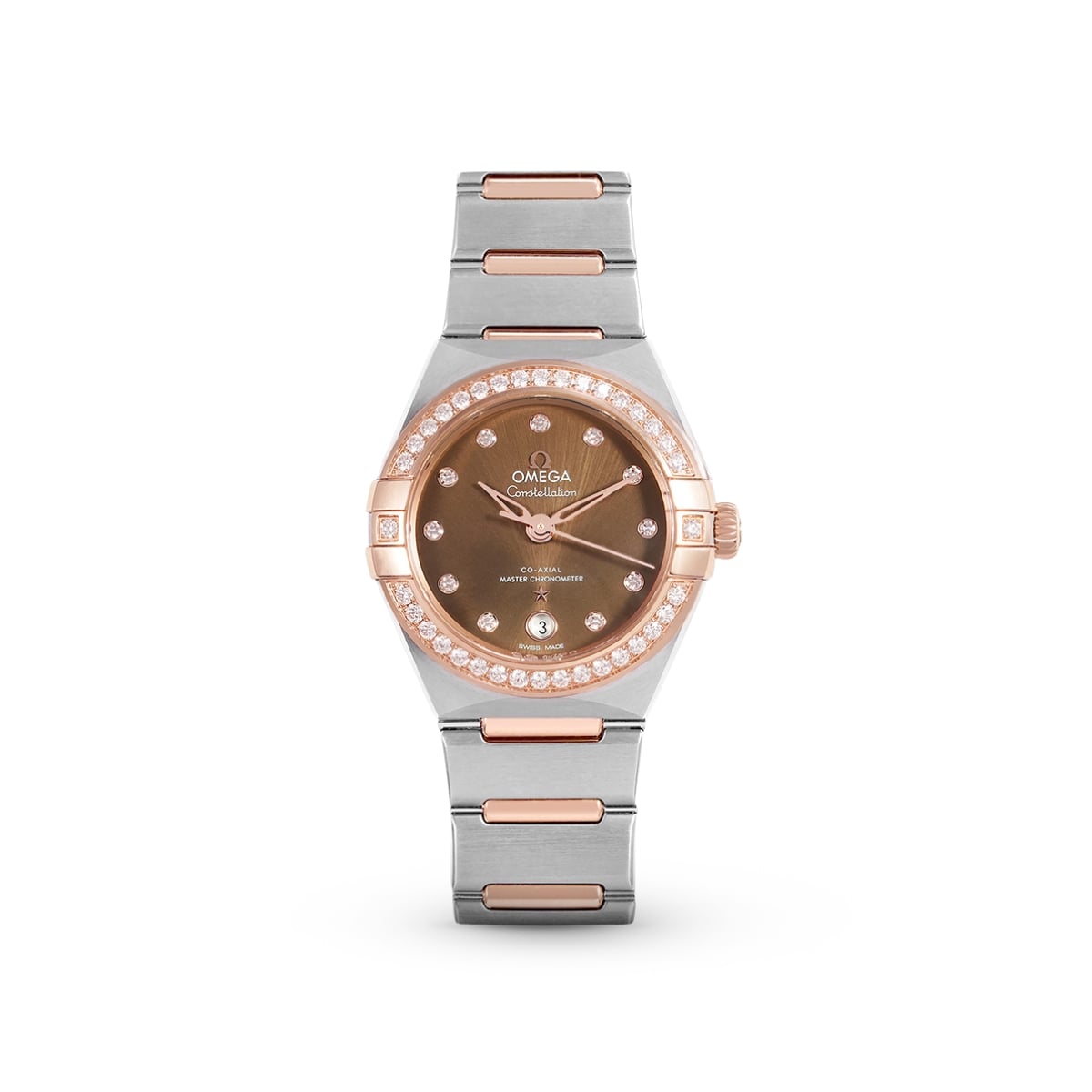
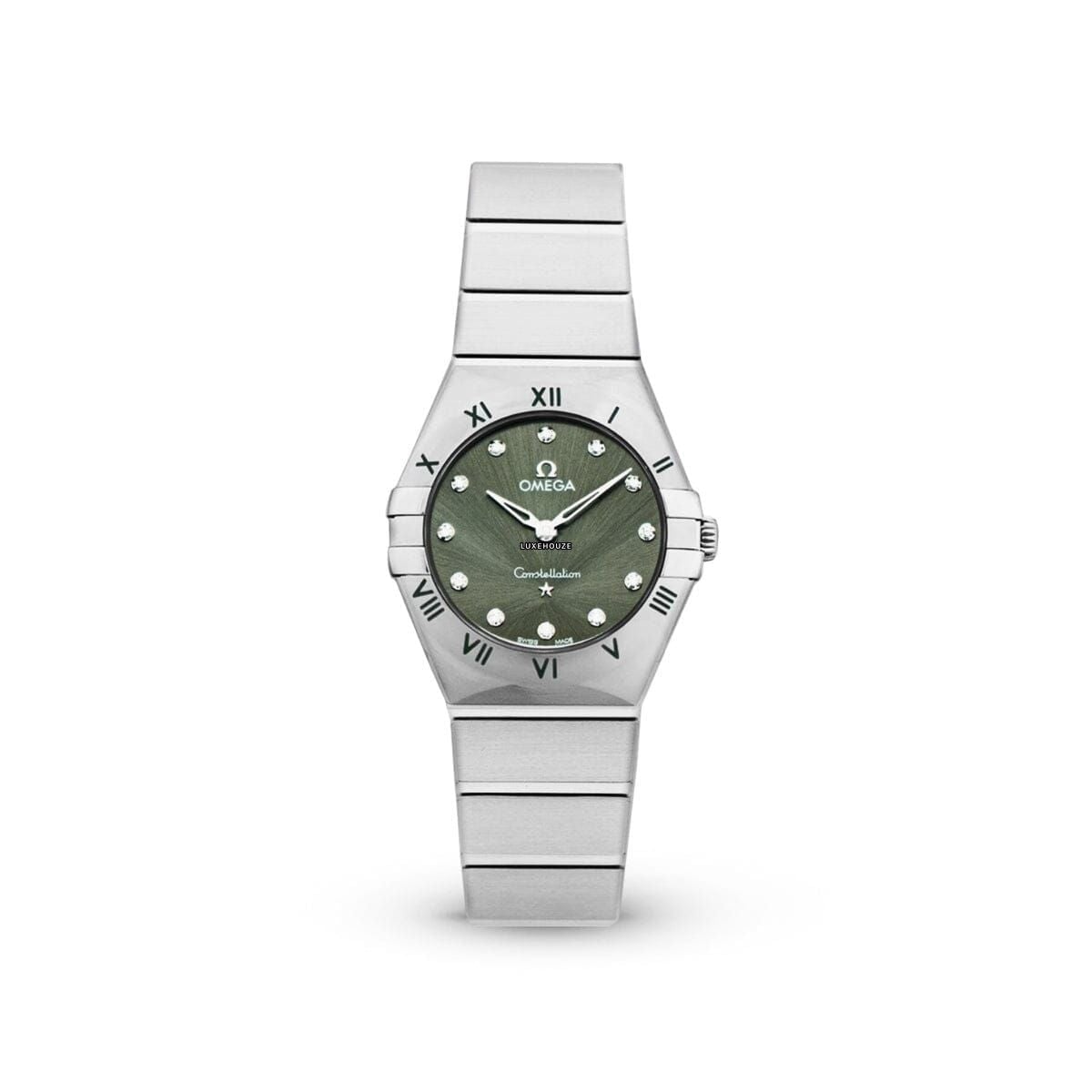
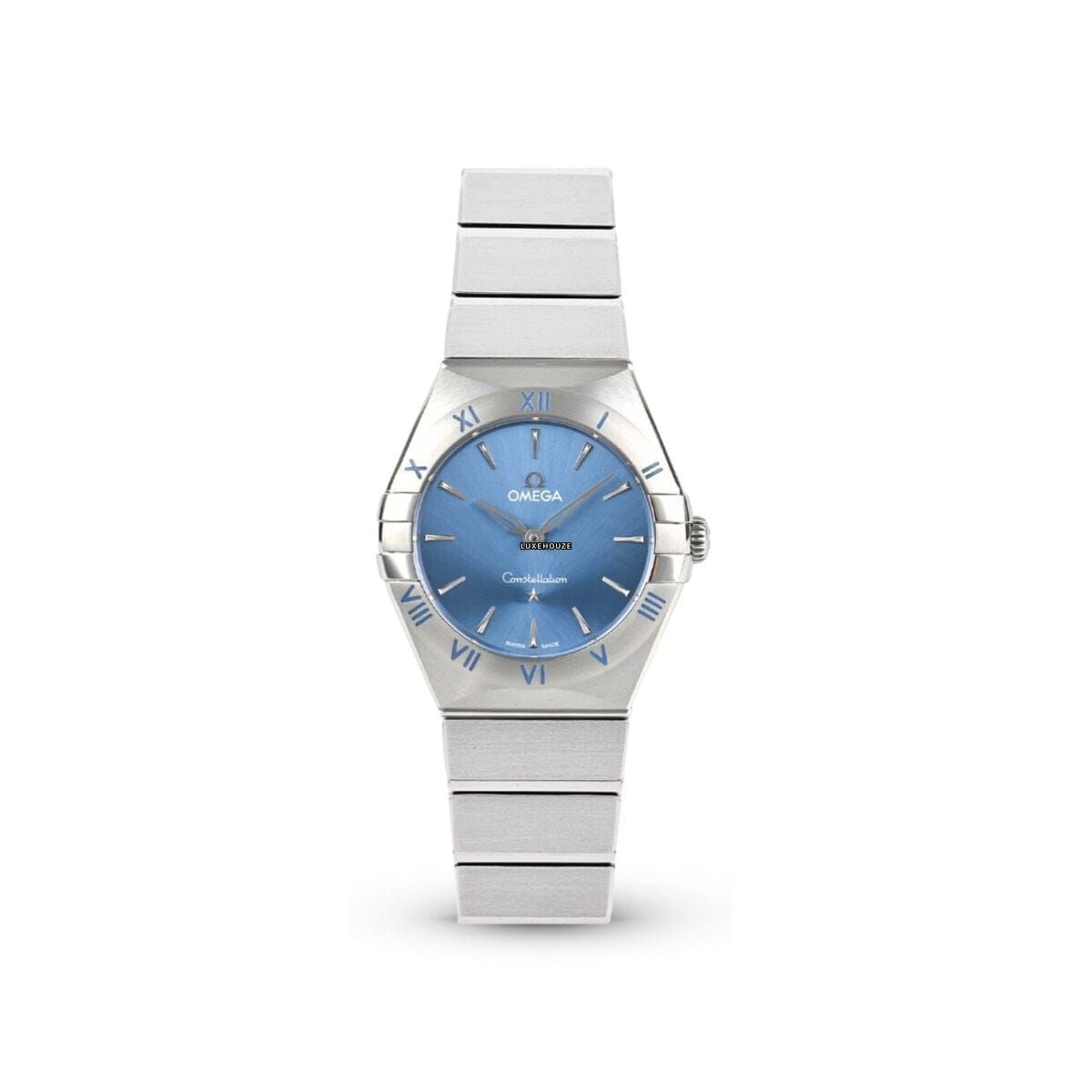
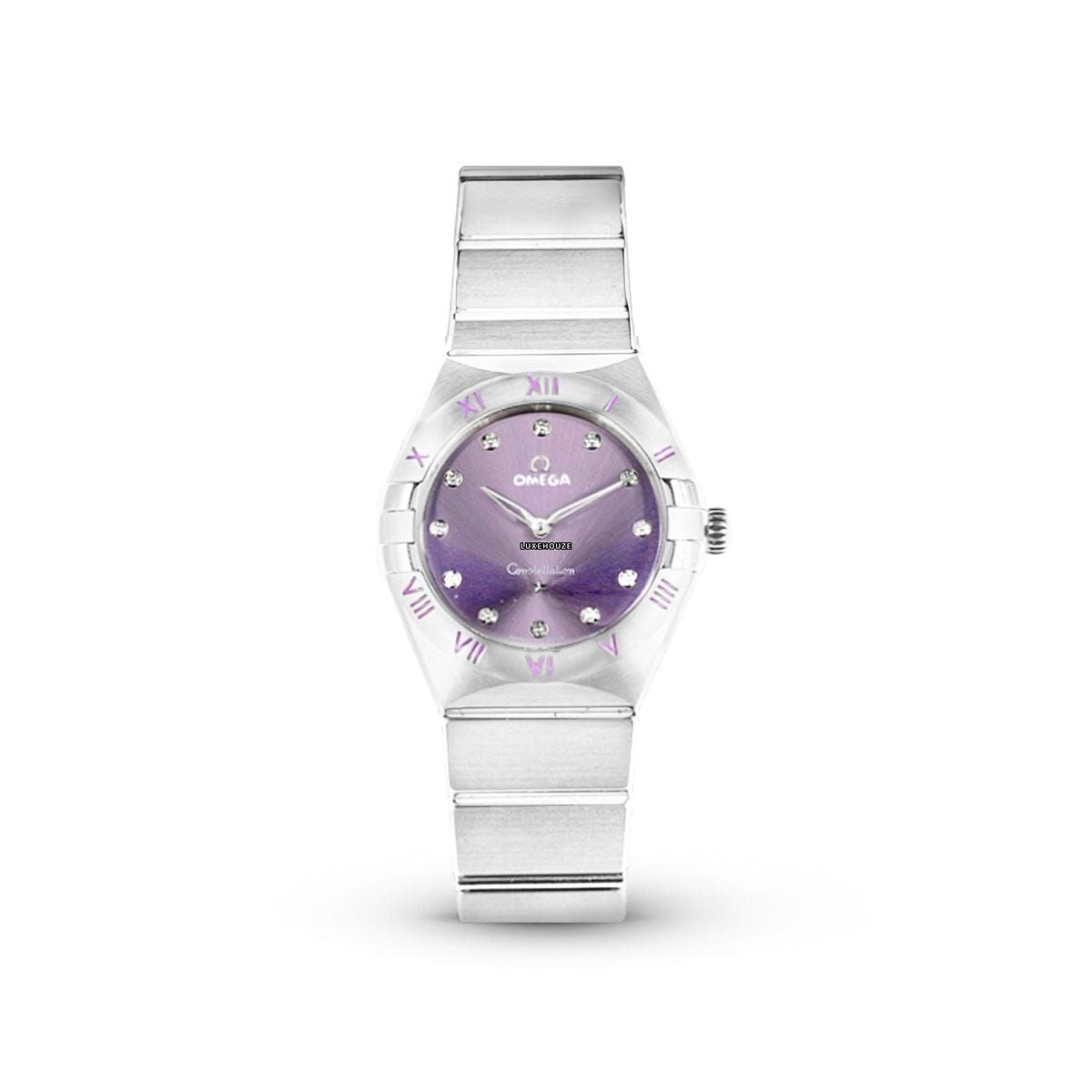
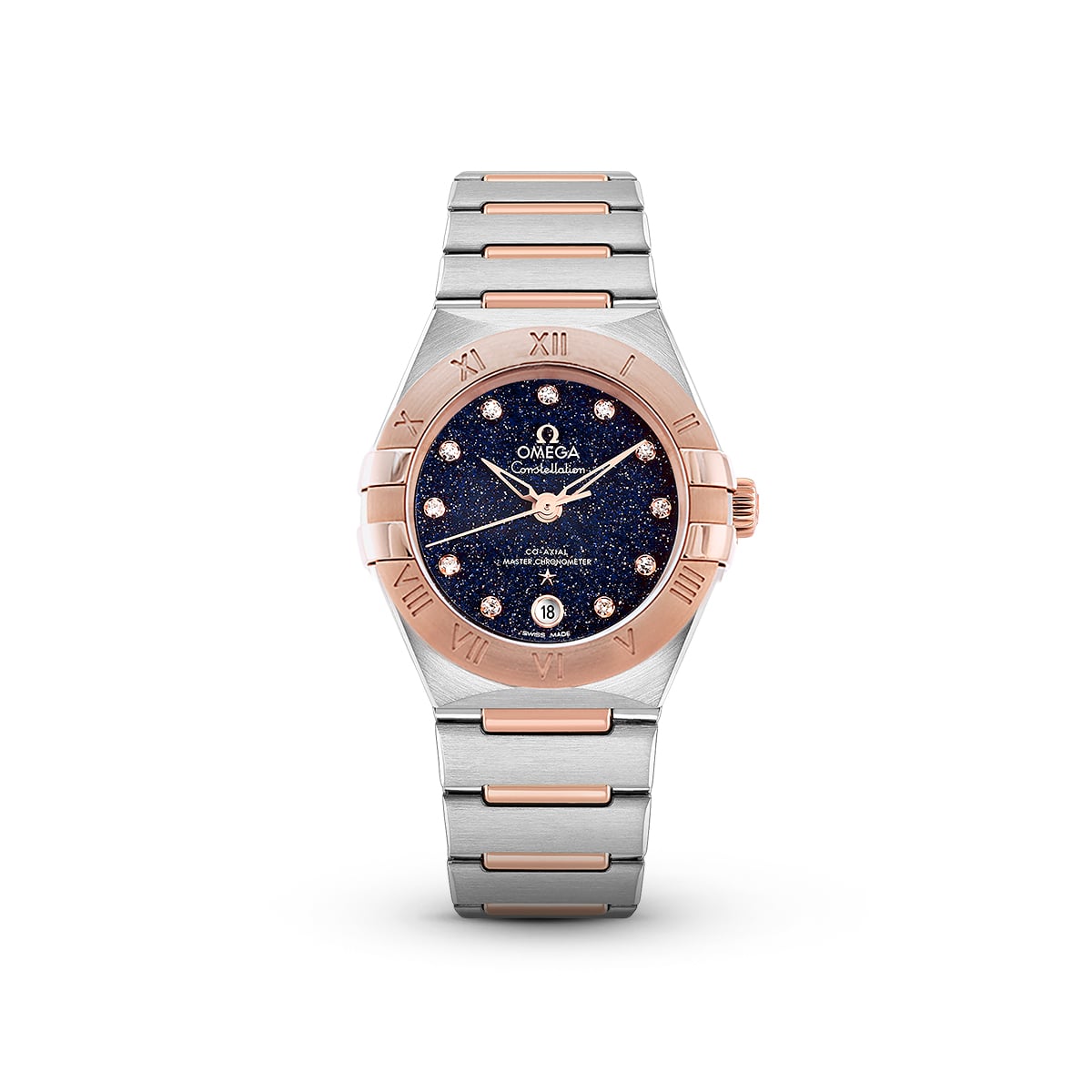
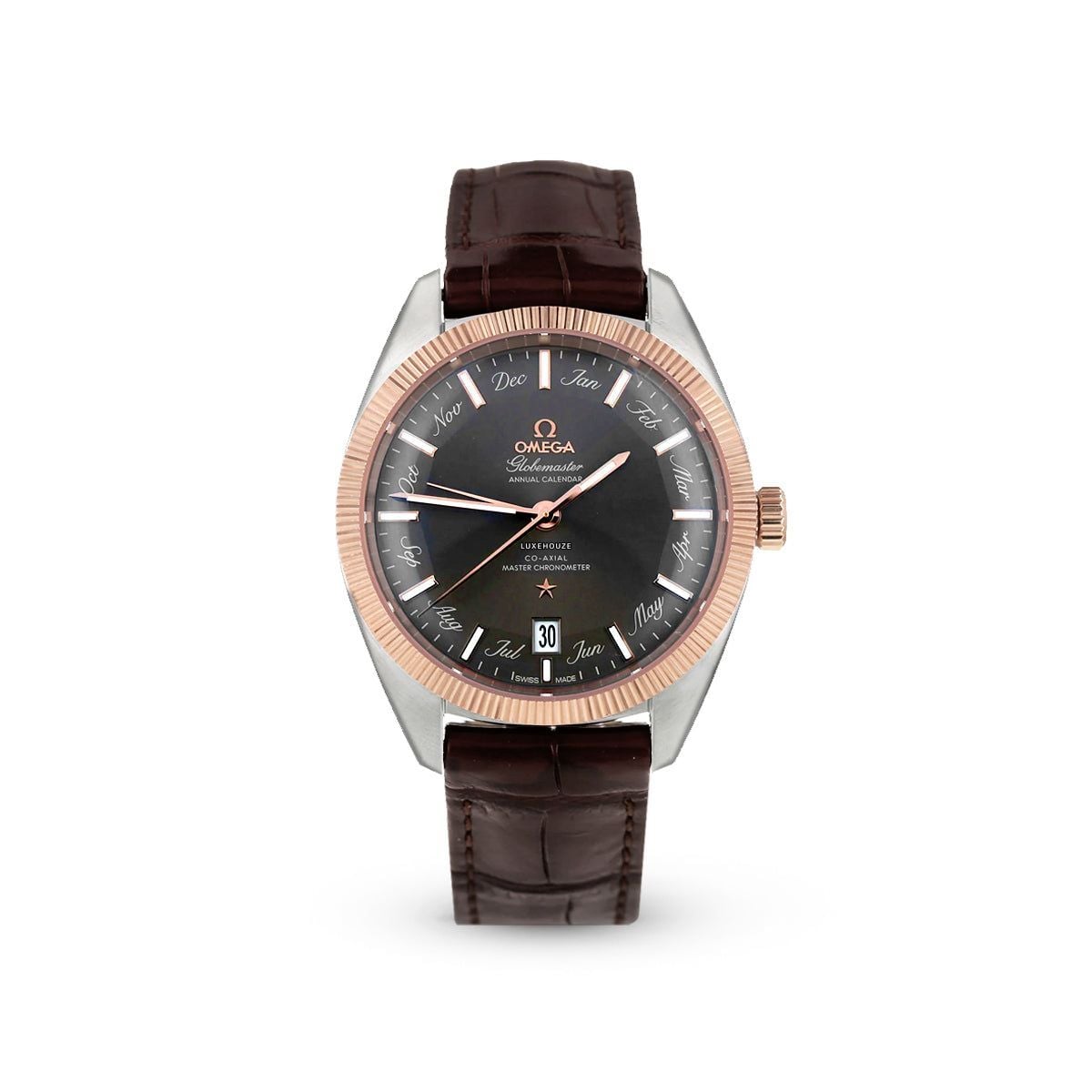
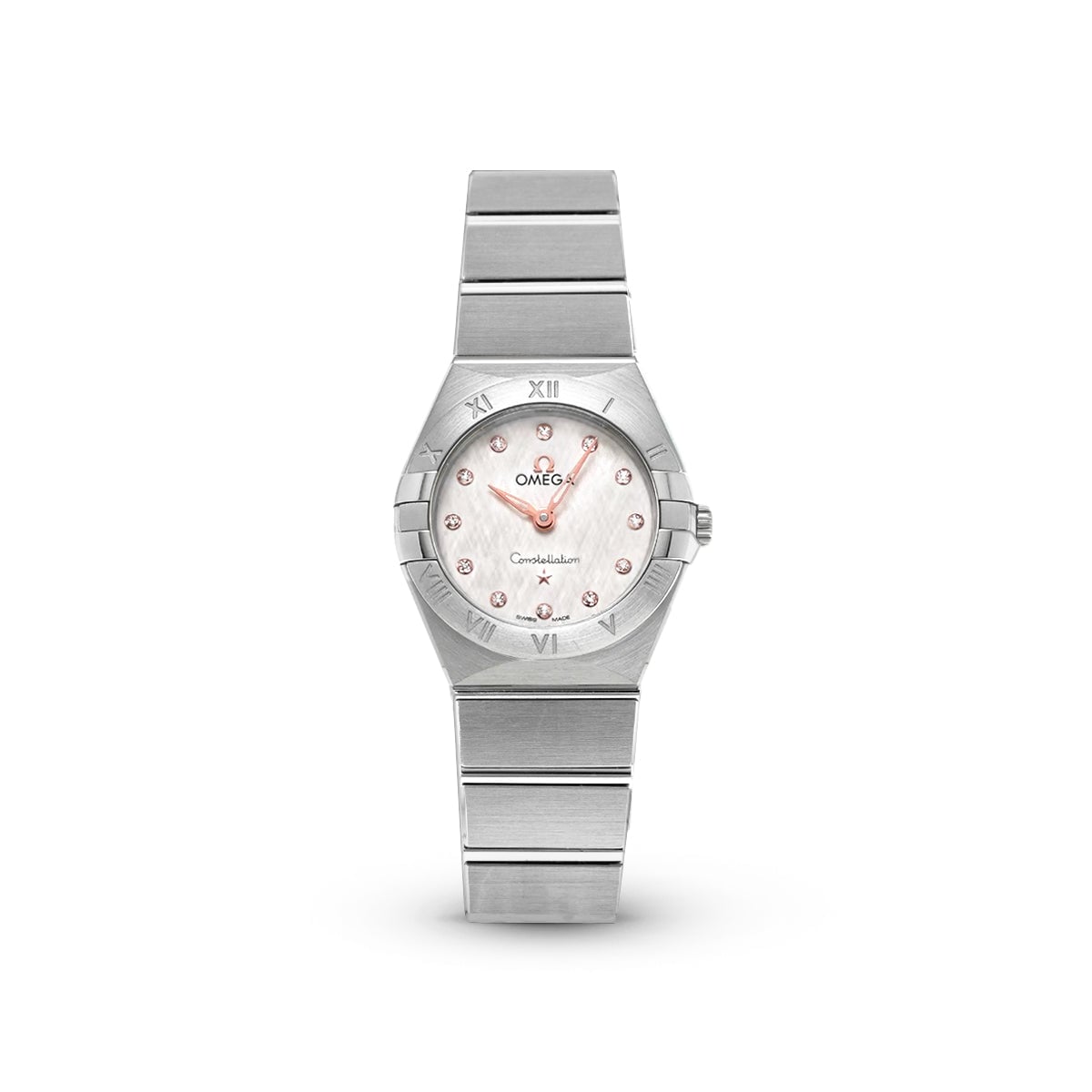
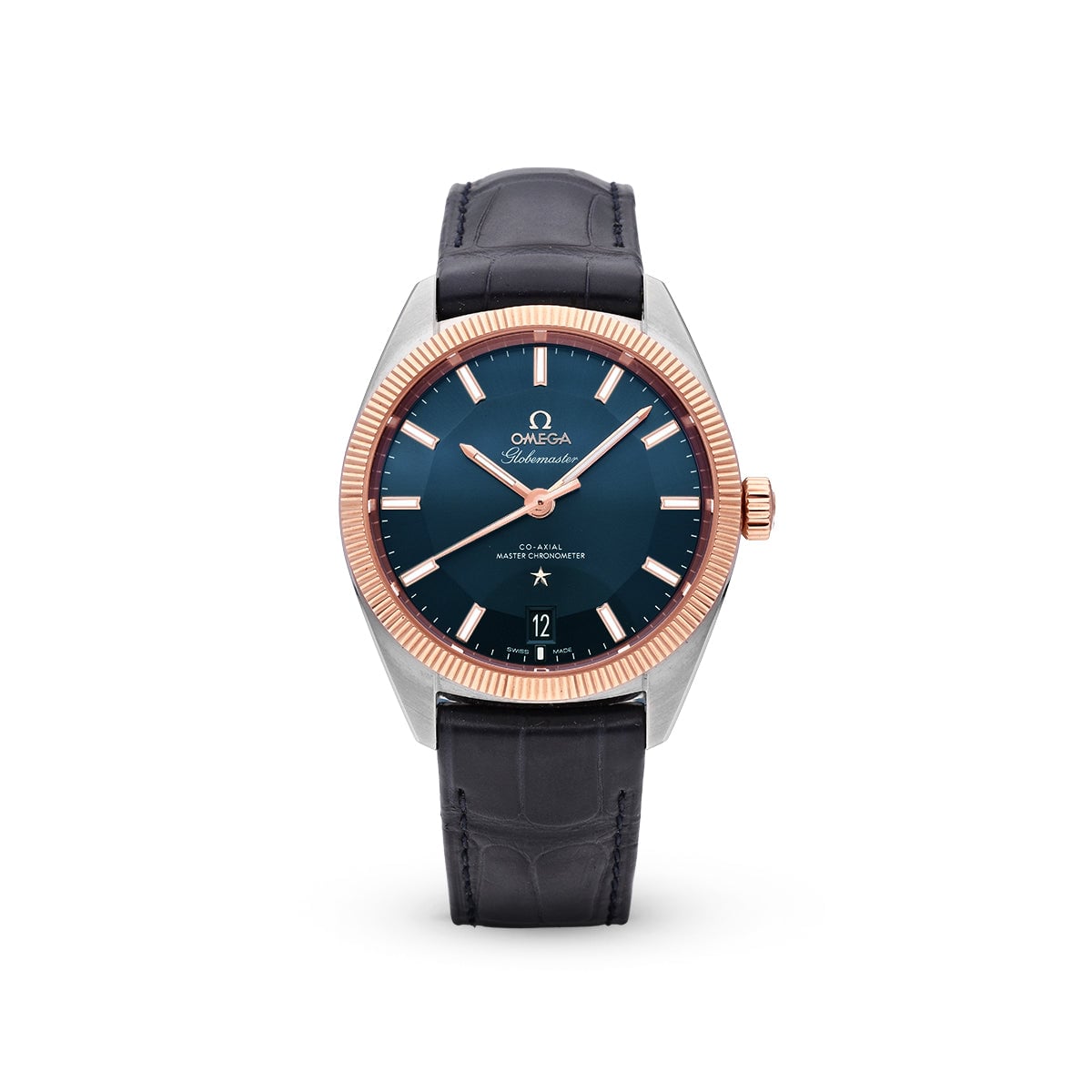
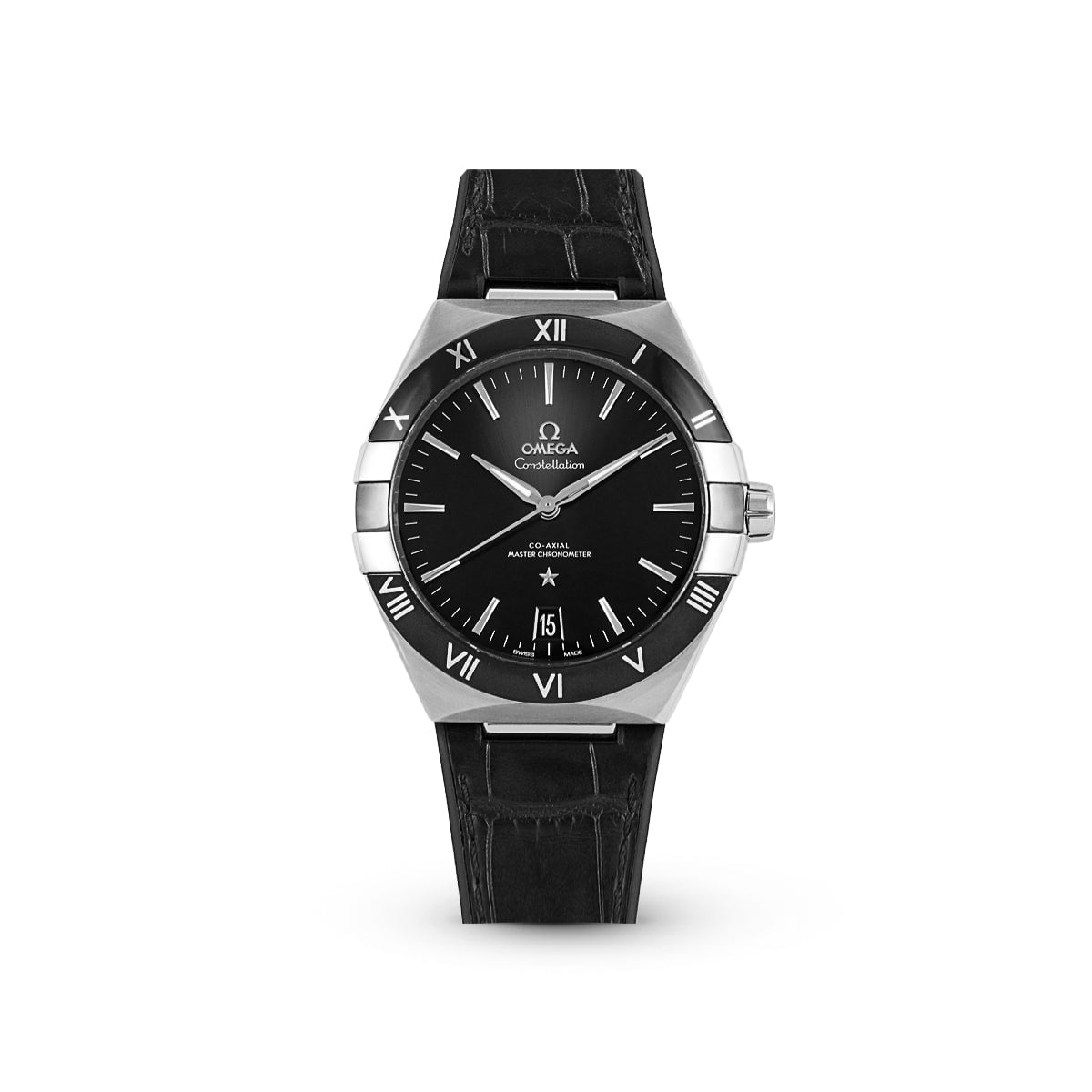
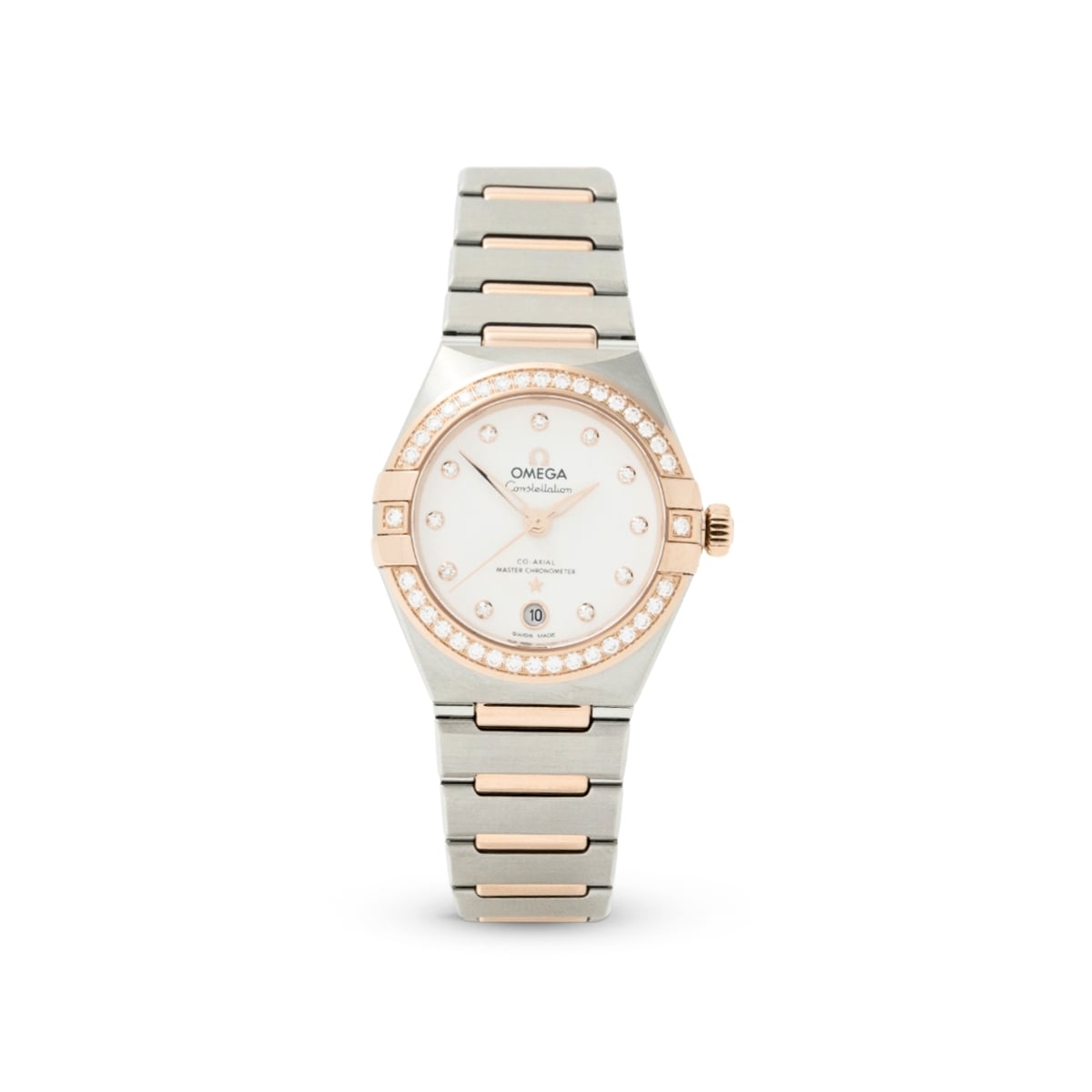
About the Omega Constellation
The Omega Constellation is the second-oldest collection in the catalog of Omega that is still in production today. First introduced in 1952, the Constellation was created to meet the need for a highly precise timepiece that would also remain refined enough for formal settings.
It is not a dive watch. Instead, the Constellation represents Omega’s interpretation of what is often described as a dress watch.
Among Omega’s collections, the Constellation is sometimes less visible compared to the cultural presence of the Omega Seamaster and the Omega Speedmaster. Yet this is precisely what makes it appealing to collectors who prefer a watch that is recognized for its design and craftsmanship rather than its immediate visibility.
Today, the collection consists of two main lines: the Omega Constellation Manhattan, known for its iconic “griffes” or claws on the side of the case, and the Omega Constellation Globemaster, which reintroduces vintage design elements from the 1950s in a modern format certified as a Master Chronometer.
History of the Omega Constellation
The Constellation was born from the momentum of Omega’s 100th anniversary in 1948. After launching the Seamaster as their first water-resistant watch, Omega wanted to introduce a second collection.
As a result, in 1952 the Omega Constellation was introduced as the brand’s first mass-produced chronometer watch line.
The name “Constellation” was chosen with purpose. It refers to the stars in the sky, a metaphor for the precision of navigation that forms the core philosophy of the collection.
Early versions featured a caseback engraved with an astronomical observatory surrounded by eight stars. This number represented the precision records Omega achieved at the Kew-Teddington and Geneva observatories during the mid-20th century.
The 1960s brought significant design changes with the introduction of the C-shaped case that integrated the bracelet directly into the case structure.
Later, in 1982, the Omega Constellation Manhattan was introduced with the distinctive griffes on the side of the case, an element that would define the identity of the collection for decades.
Another milestone came in 2015 when Omega introduced the Omega Constellation Globemaster as the first watch in the world to receive the Master Chronometer Certification from METAS, one of the most rigorous verification standards in modern watchmaking.
Key Characteristics of the Omega Constellation
The Constellation has several defining features that distinguish it from other Omega collections and from many traditional dress watches.
- Griffes (claws) on the side of the case, first introduced with the Manhattan model in 1982 and still an iconic design element today.
- Integrated bracelet, designed to connect seamlessly with the case.
- Dial finishes available in multiple styles, including opaline, sunburst, mother-of-pearl, and seasonal color gradients.
- Co-Axial Master Chronometer movements in modern models, certified by METAS and resistant to magnetic fields up to 15,000 gauss.
- Material options ranging from stainless steel to two-tone combinations with Sedna Gold or Yellow Gold, as well as full gold and platinum versions.
- Water resistance of 100 meters, offering practical durability.
- Available for men and women, including Globemaster sizes at 39 mm and 41 mm, and Manhattan models such as the 29 mm version.
- Caseback engraving featuring the observatory and surrounding stars, a symbol of the collection’s heritage.
Popular Omega Constellation Models
1. Omega Constellation Globemaster 39mm
The Omega Constellation Globemaster 39mm is currently one of the most sought-after three-hand models within the Constellation line. Introduced in 2015 as the first watch to receive Master Chronometer certification from METAS, it represents a high technical standard presented within a design inspired by the 1950s.
One of its most distinctive features is the pie-pan dial. The center of the dial is slightly raised while the outer edges slope downward, creating a subtle sense of depth that is rarely seen on flat dial designs.
This detail was directly inspired by the first Constellation model released in 1952. The fluted bezel, another defining element, is often crafted from tungsten carbide in the stainless-steel version.
With a diameter of 39 mm, the Globemaster tends to appear slightly larger on the wrist than its measurements suggest. The depth of the dial contributes to this effect, creating an interesting visual impression.
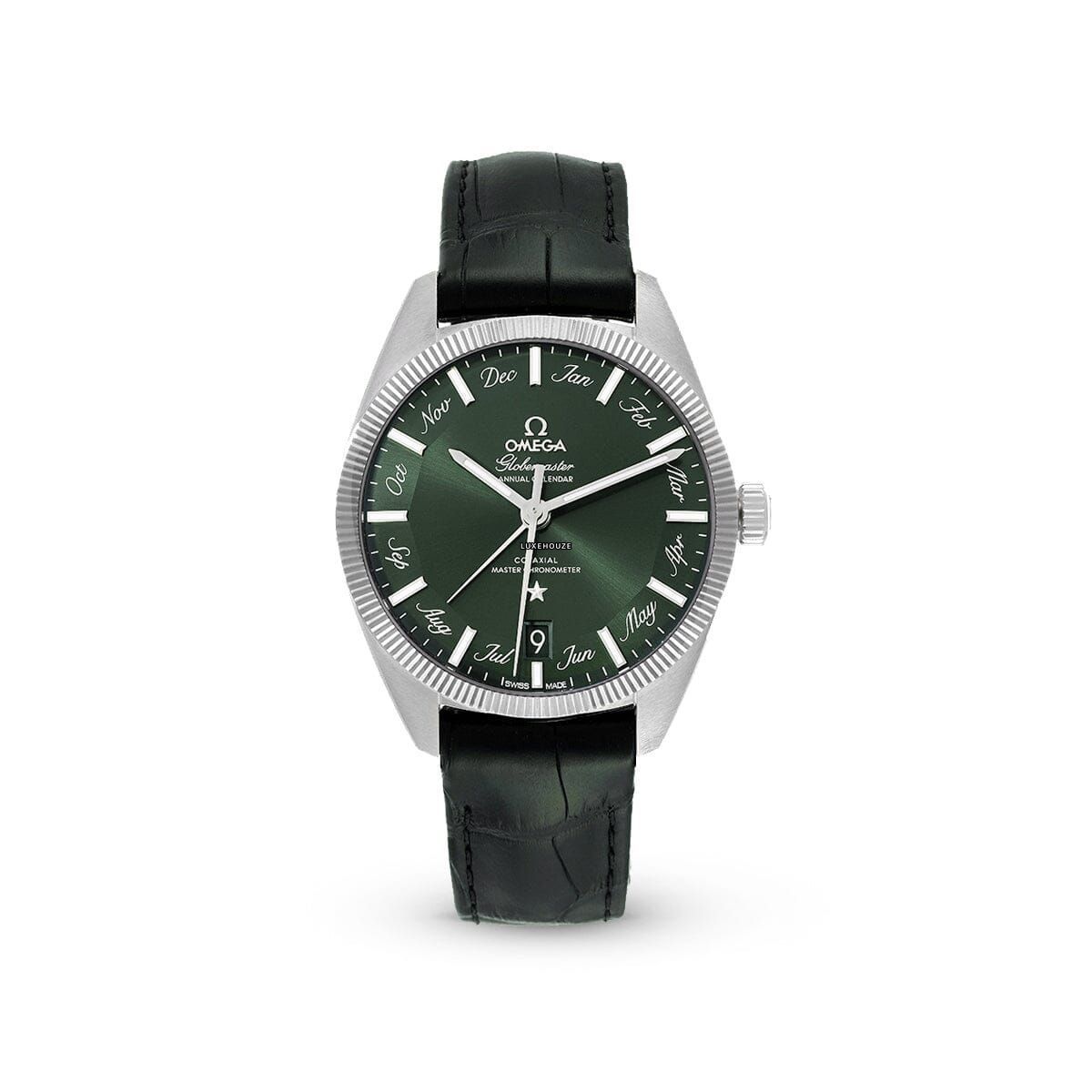
2. Omega Constellation Globemaster Annual Calendar 41mm
The Omega Constellation Globemaster Annual Calendar 41mm adds an annual calendar complication to the Globemaster architecture. With a slightly larger case size of 41 mm, the design accommodates additional information on the dial.
This model uses the Omega Caliber 8922 movement, which includes an additional hand that points to the month displayed around the dial between the hour markers.
The practical value of the annual calendar lies in its ability to automatically adjust the date for months with 30 or 31 days. Only one manual adjustment is required each year at the end of February.
The dial uses a reverse pie-pan design, curving in the opposite direction compared to the standard Globemaster. This subtle change creates a distinct visual identity within the same family.
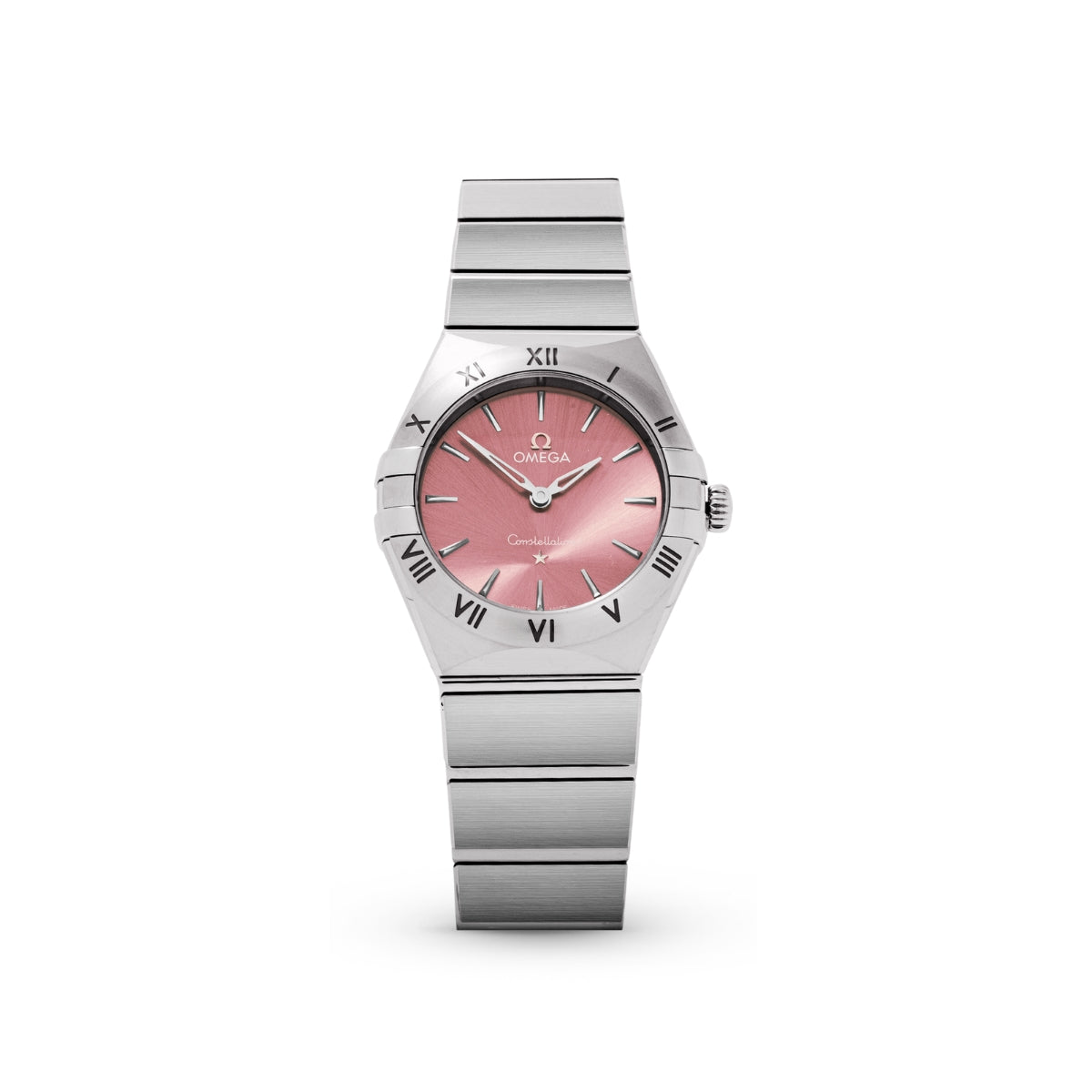
3. Omega Constellation Manhattan
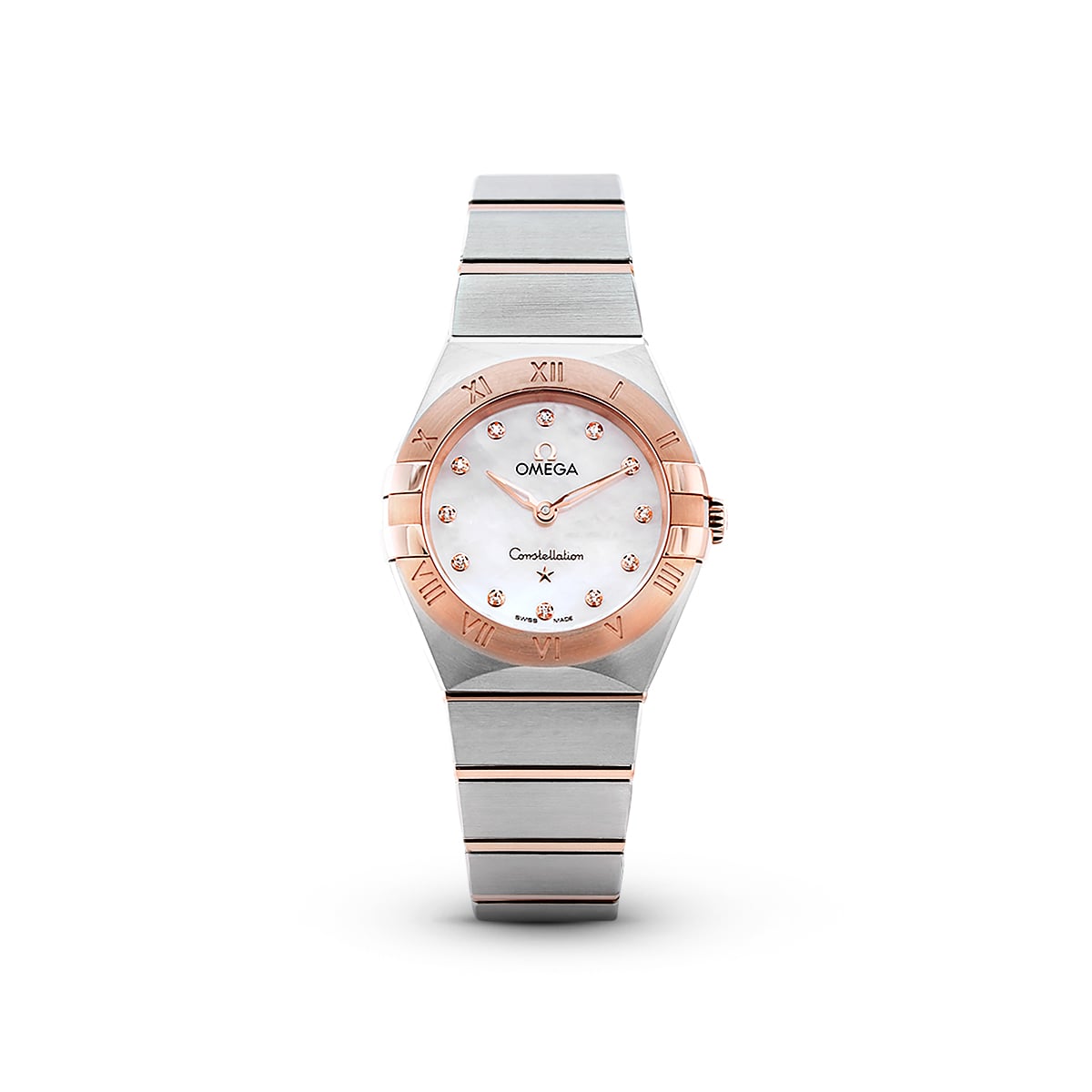
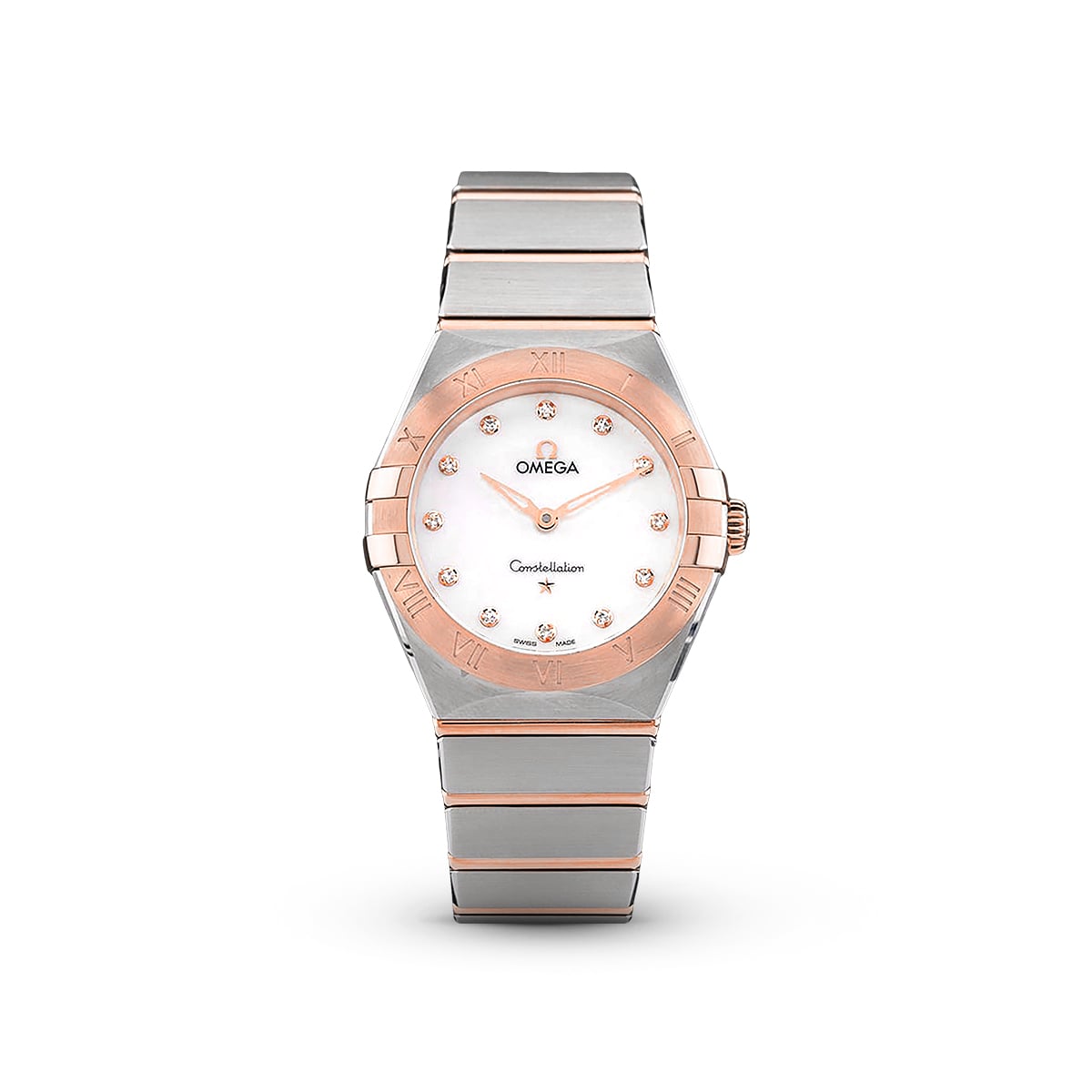
The Omega Constellation Manhattan is the model most closely associated with the visual identity of the Constellation collection. First introduced in 1982 and designed by Gérald Genta, it introduced the griffes that would later define the collection.
The latest Manhattan models feature the Co-Axial Master Chronometer Caliber 8800 within a 39 mm case for men, along with a broader range of dial options compared with earlier generations.
The polished and beveled edges of the case and bracelet create a subtle shine that highlights the quality of the materials without appearing excessive.
The hour markers and hands are inspired by the architecture of the One World Trade Center in New York, adding a contemporary touch to a design that has existed for more than four decades.
Interested in Other Luxury Brands?
You may also explore other fine watch and fashion houses available at Luxehouze:
Watches:
Rolex | Patek Philippe | Audemars Piguet | Richard Mille | Cartier | Panerai
Fashion:
A.P.C. | Alaïa | Balenciaga | Bottega Veneta | Fendi | Gucci | Hermès | Loewe | Miu Miu | Prada | Totême
FAQ – Omega Constellation
1. What is the difference between Constellation Manhattan and Constellation Globemaster?
The Omega Constellation Manhattan features the distinctive griffes on the side of the case introduced in 1982. Its design is more urban and contemporary, with a strongly integrated bracelet.
The Omega Constellation Globemaster, introduced in 2015, revisits the vintage aesthetics of the 1950s Constellation models. It features a convex pie-pan dial and a fluted bezel, and it was the first watch to receive Master Chronometer certification from METAS.
Both belong to the same Constellation family but present different visual and technical approaches.
2. What is Master Chronometer certification and how does it affect the Constellation?
Master Chronometer Certification is a precision certification introduced by Omega in 2015. To receive it, a watch must pass a series of strict tests conducted by METAS, including accuracy tests in magnetic fields up to 15,000 gauss after first passing the COSC chronometer test.
All Globemaster models carry this certification, meaning each watch has passed one of the most demanding verification standards in the watch industry.
3. Is the Omega Constellation a dress watch or a sports watch?
The Constellation is traditionally categorized as a dress watch, prioritizing refined aesthetics and precision rather than extreme durability.
However, with water resistance up to 100 meters and Master Chronometer movements, it offers technical reliability beyond many traditional dress watches. It can transition comfortably from formal settings to casual activities without the need to change watches.